
By PSA Newsroom Staff
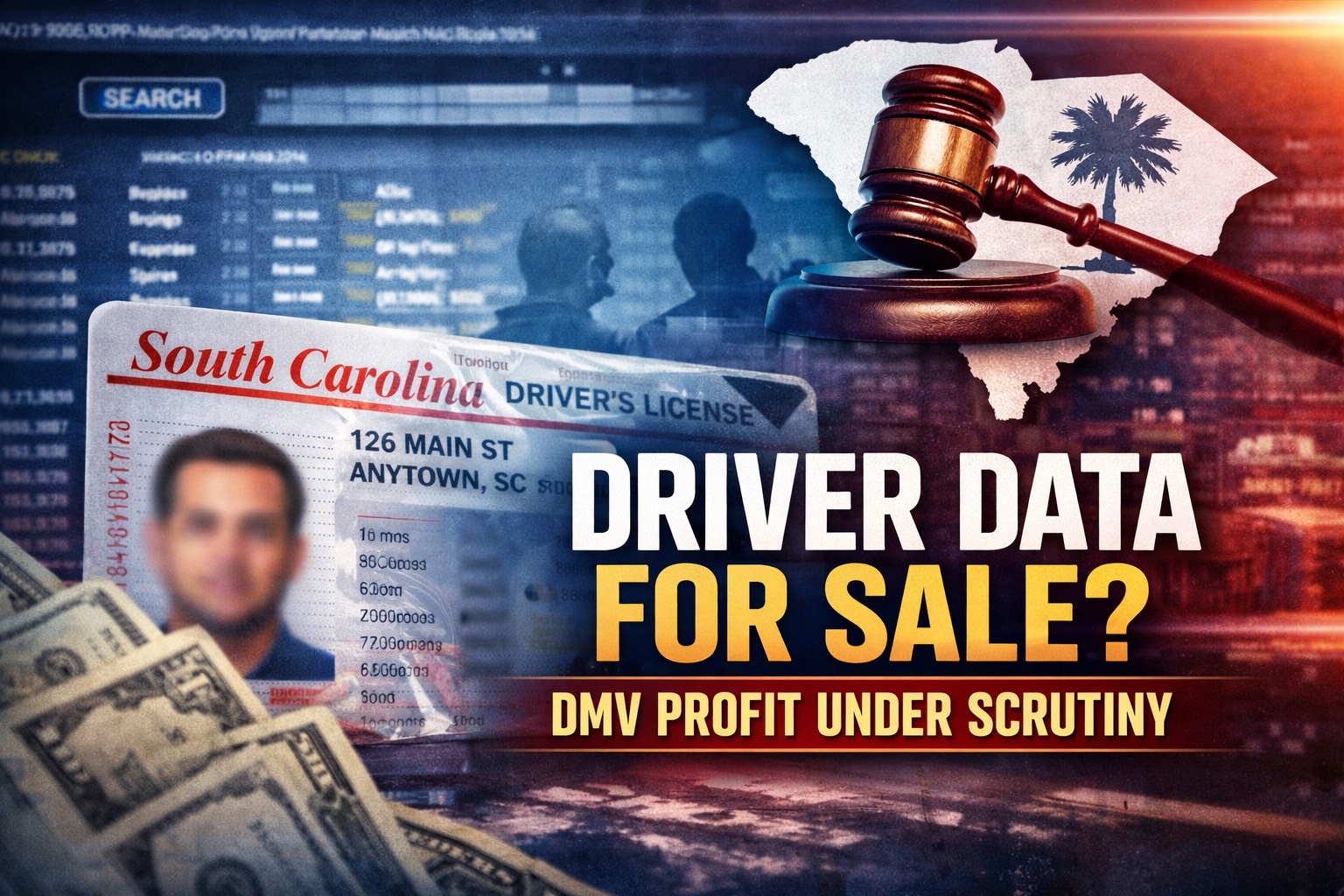
South Carolina – The South Carolina Department of Motor Vehicles has earned about $97 million over five years by selling personal driver data to private companies, according to state and local news reports.
The agency sells information collected during license applications and vehicle registrations. Purchasers include
data aggregators, insurance-related services and firms that use the information for a range of business
functions.
What Data Is Being Sold and Who Buys It?
Types of Information Provided
The DMV’s datasets include:
- Names
- Addresses
- Vehicle registration details
This information is sold — often for fees — to approved companies rather than being publicly posted online.
Major Buyers
Private firms identified in reporting include:
- LexisNexis (reported as one of the largest buyers, spending nearly $320,000 in a single year)
- Experian Automotive
- Southern Farm Bureau
- American Driving Records
- Auto Direct Data
These companies use the information for functions such as assisting toll operators in locating drivers to issue bills and helping insurers or towing companies value vehicles and assess costs.
Public Reaction: Surprise and Privacy Concerns
A DMV customer featured in reporting said he was unaware the information could be sold:
“I think that’s a foul ball. That’s out of bounds. You come to the DMV and you don’t expect your information to be sold at all,” said Ed Weathers, who went to the DMV for a replacement license.
When reporters searched a database from one buyer, Weathers found that his address, phone number, email and even potential relatives were accessible.
How the Law Governs These Sales
Driver Privacy Protection Act (DPPA)
The DMV’s ability to release data is governed in part by the federal Driver Privacy Protection Act (DPPA) (18 U.S.C. § 2721), which restricts the dissemination of personal information from motor vehicle records.
Under the DPPA, personal information includes names, addresses, telephone numbers and other identifying details maintained by state DMVs.
However, the law also contains 14 permissible uses under which the DMV can legally disclose data if it’s for a purpose defined in federal statute. These permitted uses include:
- Use by government agencies or courts
- Insurance claims investigations or antifraud activities
- Providing information to toll facilities
- Statistical research, provided personal data is not published
- Other specific, lawful business purposes
No Opt-Out for Drivers
Drivers generally cannot opt out of providing personal information when applying for a license or registering a vehicle, and there is no broad mechanism for residents to prevent data from being disclosed under the statute’s permitted uses.
Industry Experts Weigh In
Some academic experts cited in the reporting described the data market as large and complex but legally permissible:
“Data is the new oil. It’s gold, it’s a currency that is being traded and it is sold and bought very often,” said Emory Hiott, an assistant professor of marketing.
Another expert noted that although the practice isn’t inherently harmful, the data ecosystem can feel unregulated, particularly as technology accelerates data transactions.
Where to Read More
Original news coverage: “SCDMV selling millions of dollars in personal data to private companies” — reporting by WMBF News and regional affiliates.
https://www.wmbfnews.com/2026/02/03/scdmv-selling-millions-dollars-personal-data-private-companies
Federal law reference — DPPA: Summary of what the Driver Privacy Protection Act covers, including permissible disclosures under 18 U.S.C. § 2721.
https://en.wikipedia.org/wiki/Driver%27s_Privacy_Protection_Act
Legal explanation of DPPA: Detailed look at the law’s protections and permitted uses.
