
By PSA Newsroom Staff Editorial
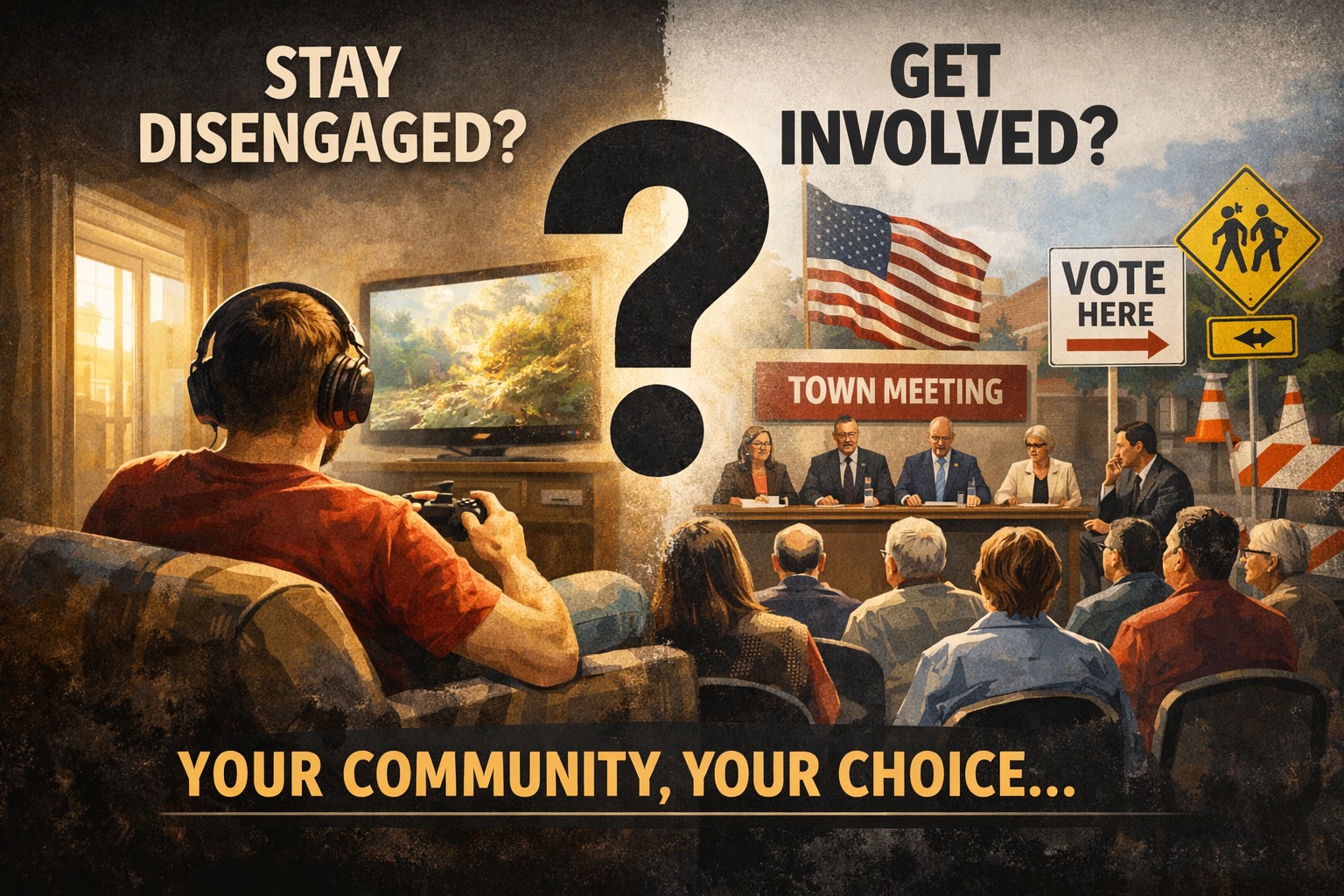
Not wanting to be involved in politics is absolutely a right. No one is obligated to attend meetings, campaign, vote, or engage in debates. Political disengagement can be a form of self-care, especially when national politics feels toxic, exhausting, or far removed from daily life.
But whether it’s wise—especially at the local level—is a different question.
Local politics often operates quietly, yet it has the most direct impact on everyday life:
- property taxes and assessments
- zoning and development
- school policies
- police, fire, and EMS services
- water, roads, and infrastructure
When people disengage locally, decisions don’t stop—they’re simply made by a much smaller group, often those with time, money, or specific agendas. That’s how a handful of voices can steer outcomes for an entire town.
Importantly, being involved doesn’t have to mean being partisan, loud, or confrontational. At the local level, involvement can be as minimal as:
- voting in municipal elections
- reading agendas before major votes
- asking one question at a meeting
- paying attention when something affects your neighborhood
History shows that many local problems—loss of services, sudden tax hikes, questionable development deals—don’t come from bad intentions alone, but from public absence.
So while opting out is a right, complete disengagement—particularly locally—can carry real consequences. Local government shapes daily life whether we participate or not. The question becomes less about rights and more about risk.
