
By PSA Newsroom Staff
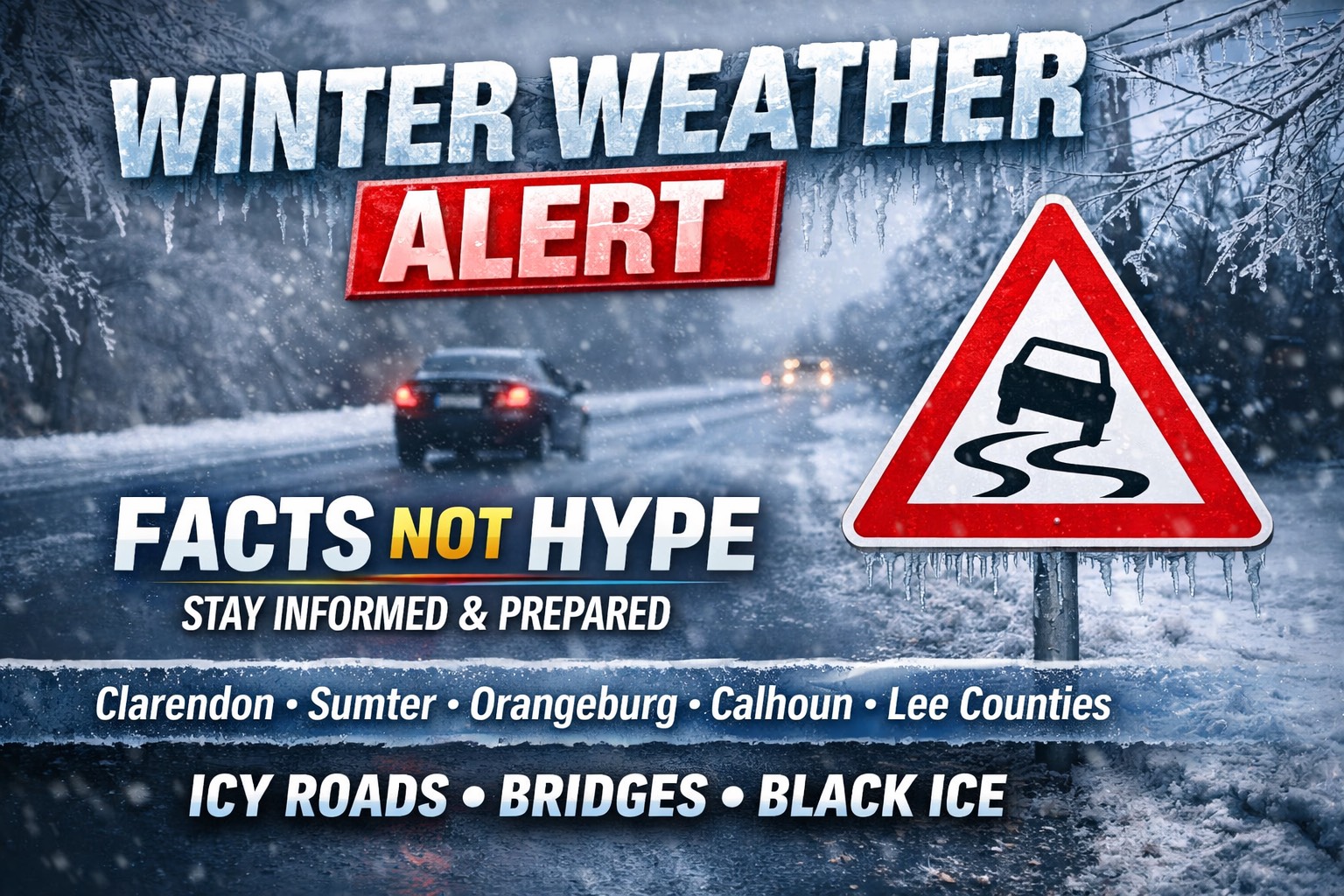
The recent winter weather system brought freezing rain and hazardous travel conditions across portions of the South Carolina Midlands, including Clarendon, Sumter, Orangeburg, Calhoun, and Lee counties. While impacts varied by location, the primary threat—ice—materialized in enough areas to justify precautionary actions by local governments and school districts.
This event reinforces two key responsibilities: the media must report verified facts rather than amplify worst-case hype, and citizens must remain calm, reasonable, and prepared when credible warnings are issued.
Forecast Performance and Local Outcomes
Forecasts correctly identified ice as the main concern and accurately captured the general timing of the threat. However, as is common with freezing rain in South Carolina, small temperature differences led to uneven results.
Some communities saw only patchy icing, while others experienced slick roads, especially during overnight and early morning hours.
Local officials acted out of caution, particularly in rural areas where untreated roads and limited resources increase risk. That proactive approach likely reduced accidents and injuries, even where conditions did not reach the most severe projections.
Confirmed Midlands Closures and Delays
Based on official announcements during the storm:
- Clarendon County School District: Closed today and transitioned to eLearning with assignment to be submitted by noon in order to be counted in attendance.
- Sumter County Schools: Closed as road conditions and reports of black ice were evaluated, particularly in rural areas.
- Orangeburg County Schools: Implemented a two-hour delay to reduce travel risk.
- Calhoun County Schools: Operated on a two-hour delay.
- Lee County: Adjusted schedules and services as conditions warranted.
Across the broader Midlands, several county and municipal offices either closed or delayed opening hours, while nonessential services were postponed until conditions improved.
Road Safety Concerns Remain After the Storm
Even as precipitation ended, hazardous conditions persisted in spots across the region. Residents are urged to remain cautious, particularly when traveling early in the morning or at night.
- Bridges and overpasses freeze before regular road surfaces and may appear wet when they are actually icy.
- Untraveled and rural roads may remain untreated longer and retain ice well after main routes improve.
- Black ice, a thin and nearly invisible layer of ice, can linger in shaded areas and on secondary roads.
Drivers should reduce speed, avoid sudden braking, and delay travel when possible until conditions fully improve.
A Call for Responsible Reporting and Public Preparedness
This event highlights the importance of measured, fact-based reporting. Media outlets serve the public best by clearly explaining what is known, what remains uncertain, and how impacts may differ by location. Sensational language and exaggerated headlines risk undermining public trust and may lead people to ignore future warnings that truly warrant concern.
At the same time, residents are encouraged to prepare sensibly rather than react emotionally. Heeding official advisories, planning for delays, and checking reliable local sources help ensure safety without panic.
Bottom Line
The Midlands did not experience a uniform outcome, but the risk was real. Early warnings, cautious decision-making, and accurate information helped limit harm. Going forward, trust—built on facts, clarity, and accountability—remains the most important tool when winter weather threatens South Carolina again.
