
By PSA Newsroom Staff
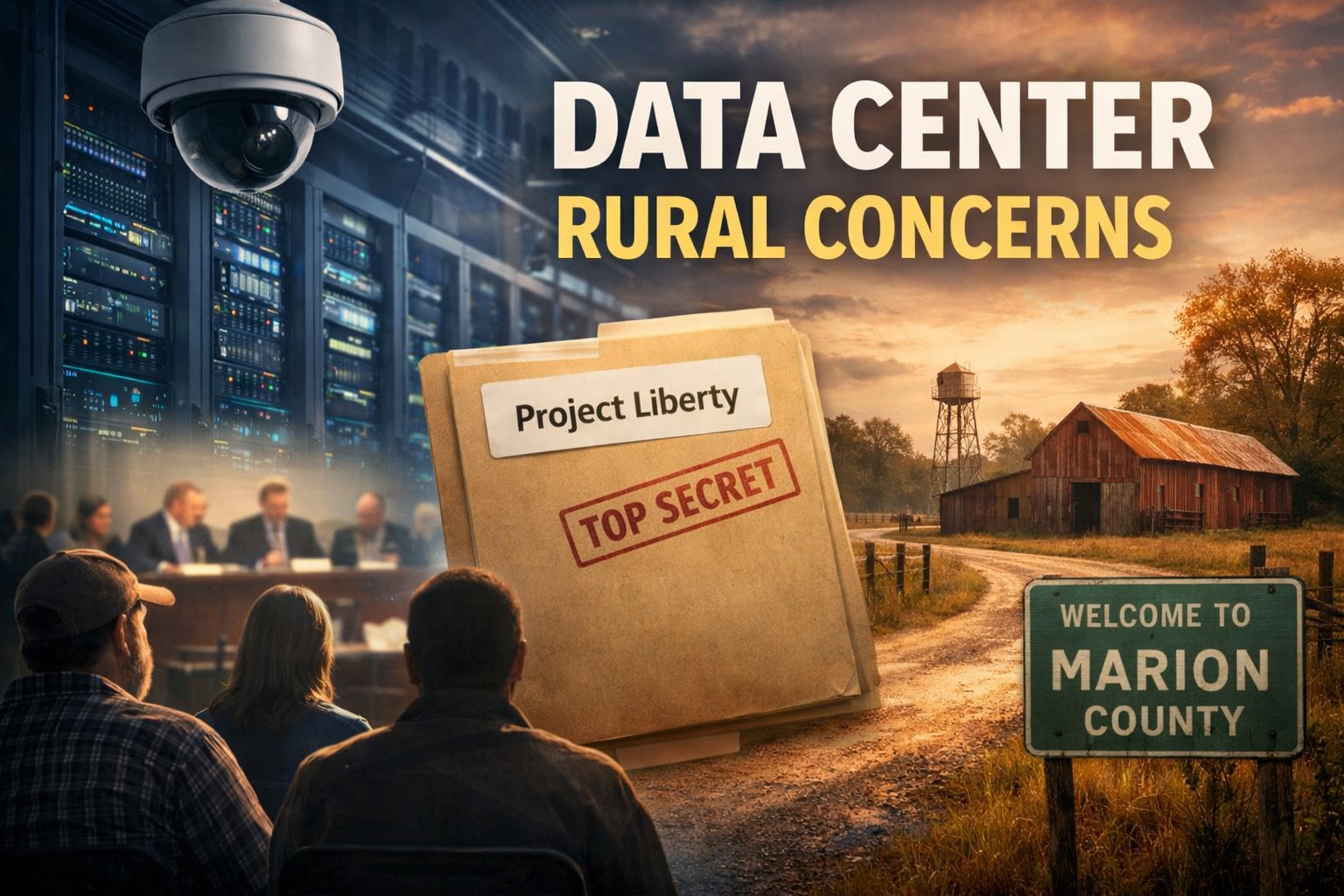
MARION COUNTY, S.C. — Marion County residents are asking for clearer answers after county council approved an ordinance that could open the door for a large data center project discussed publicly only under the code name “Project Liberty.” The company tied to the proposal was identified as Eagle Myra, LLC, with officials stating it is operating under the name Stream. Council’s approval involved pursuing a Fee in Lieu of Tax and Incentive Agreement, a common economic development tool, but the special-called meeting offered few specifics about the project’s size, timeline or long-term impact.
A project approved with few answers
According to county officials, engineers associated with the project estimated average daily water use at approximately 7,175 gallons and said the facility would use a closed-loop cooling system that does not continuously draw from outside water sources. Despite those assurances, residents say questions remain about electricity demand, infrastructure upgrades and how the development could alter the surrounding rural landscape.
What data centers bring and what they demand
Data centers can bring large capital investment to rural communities and may support expanded broadband and utility infrastructure. Construction phases often generate short-term employment and economic activity. Once operational, however, data centers typically employ relatively few permanent workers while consuming substantial amounts of electricity. In small, rural counties, that imbalance can raise concerns about long-term costs, especially if utility systems must be expanded or reinforced.
Why secrecy fuels concern
Community unease has been amplified by the limited public discussion surrounding the proposal. Projects introduced under code names and nondisclosure agreements can leave residents feeling excluded from decisions that affect land use, taxes and infrastructure. While confidentiality is common in economic development negotiations, a lack of accessible information can undermine public confidence in the process.
Bottom line: transparency matters
Data centers generally do not pose a direct privacy risk to nearby residents, as they do not collect or access local personal data. The larger issue in Marion County appears to be transparency. When major development and tax incentive decisions move forward without clear, detailed communication, uncertainty and mistrust grow. For rural communities facing high-impact proposals, openness and public engagement are often just as important as the promise of economic growth.
