
By Palmetto State Auditor Staff
CLARENDON COUNTY, S.C. — A review of contract amendments approved in 2024 by the Clarendon County School District Board of Trustees shows a series of decisions that significantly expanded the superintendent’s job security, compensation, and severance protections—while increasing long-term financial risk for local taxpayers and limiting flexibility for future school boards.
Between March and November of 2024, the Board adopted the Third and Fourth Amendments to the superintendent’s employment agreement. Together, those changes added years to the contract, increased guaranteed compensation, and made termination more costly, all without tying new benefits to performance benchmarks or district outcomes.
Contract Extensions Approved Ahead of Election
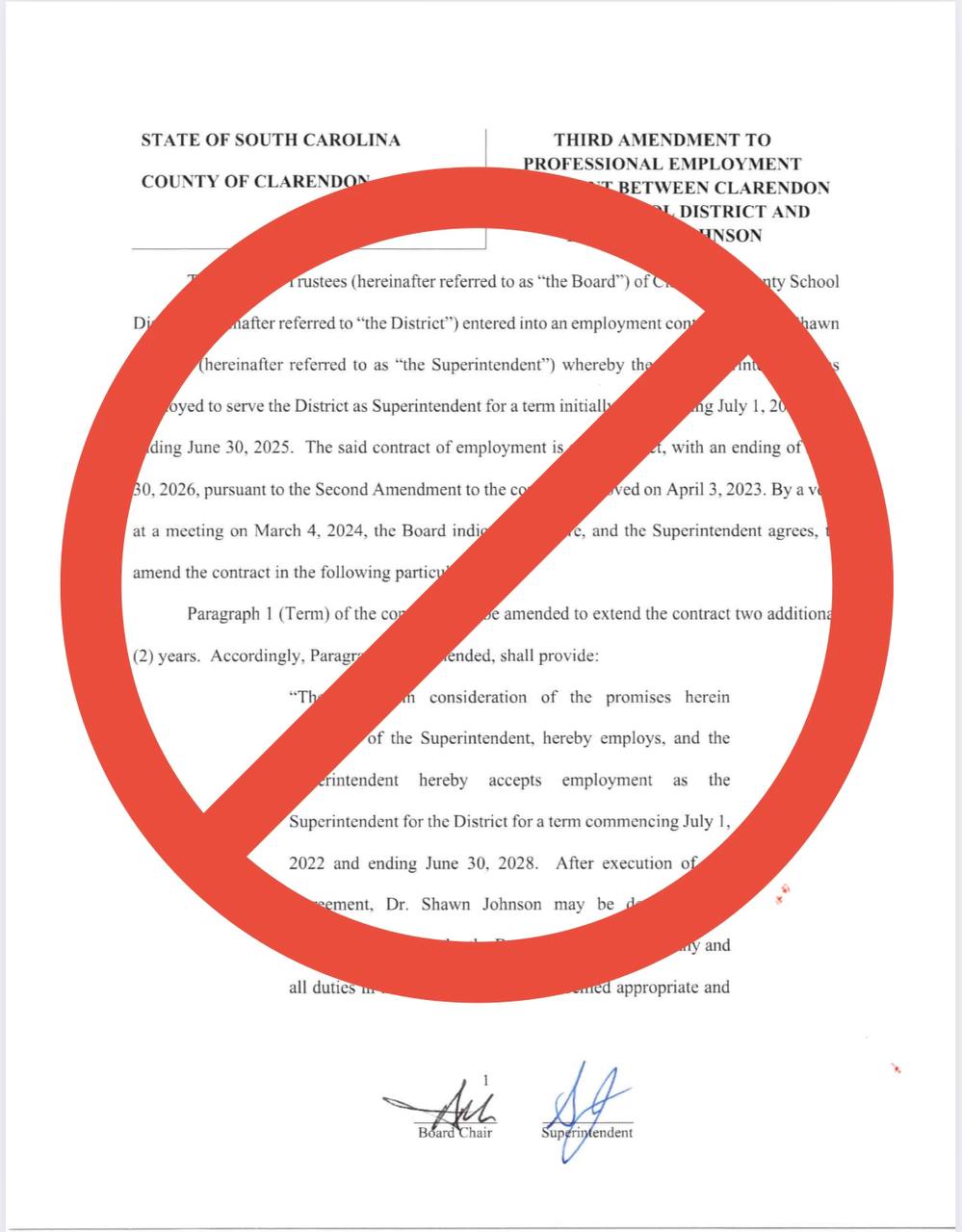
Under the Third Amendment, approved March 4, 2024, the Board extended the superintendent’s contract by two years, moving the expiration date from June 30, 2026, to June 30, 2028. The amendment also promised an additional two-year extension if the superintendent received a “satisfactory” evaluation before the 2024 general election.
Eight months later, on November 6, 2024—just after the election—the Fourth Amendment added yet another year, pushing the contract end date to June 30, 2029.
In total, the superintendent secured three additional years of guaranteed employment in less than a year. The extensions were approved before voters could seat new board members, effectively locking future boards into a long-term agreement negotiated by their predecessors.
Severance Protections Increased and Preserved
The Third Amendment also raised the financial stakes of termination. Severance pay for termination without cause was increased to 18 months of salary, or the remainder of the contract term if less. The amendment required a supermajority vote—six of nine trustees—to terminate the superintendent and restricted the superintendent’s ability to appear before the Board following termination.
The Fourth Amendment left these provisions intact, even as the contract term was extended.
As a result, the cost of removing the superintendent increased substantially. Each additional year added to the contract also extended the district’s potential severance exposure, regardless of performance concerns or loss of confidence by the Board.
Pay Raise and Guaranteed Compensation Added
While the Third Amendment focused primarily on contract length and severance, the Fourth Amendment addressed compensation directly.
Under the Fourth Amendment, the superintendent received:
• An immediate 3 percent annual salary increase, raising base pay to $231,750.
• A guaranteed salary floor that prohibits any pay reductions during the contract term.
• A new 4 percent district contribution to a retirement annuity selected by the superintendent.
None of these compensation increases were tied to measurable performance standards, budget improvements, enrollment growth, or academic outcomes.
Risk Shifted to Taxpayers
Taken together, the two amendments substantially altered the balance of risk in the contract.
The superintendent gained:
• Long-term job security
• Higher guaranteed pay
• Enhanced retirement benefits
• Stronger protections against termination
Taxpayers assumed:
• Increased severance liability
• Reduced board flexibility
• Long-term financial commitments with limited accountability mechanisms
Notably absent from the amendments were safeguards commonly used to protect public funds, such as clawback provisions, performance-based compensation triggers, or clauses that reduce liability if district conditions worsen.
Questions About Board Oversight
The timing and substance of the amendments raise broader questions about governance and fiscal stewardship.
The superintendent was already under contract when the Board approved the extensions and compensation increases. Despite that leverage, the Board did not negotiate concessions, performance conditions, or cost controls in exchange for the added benefits.
By acting before the 2024 election and extending the contract beyond the terms of several trustees, the Board also constrained the authority of future boards to make changes without incurring significant financial penalties.
Bottom Line
The 2024 contract amendments prioritized stability and financial protection for the superintendent while increasing costs and long-term risk for the school district.
In effect, the Board committed public dollars to a rigid and expensive contract without demanding additional accountability. The superintendent received extended job security, higher guaranteed pay, and enhanced benefits. Taxpayers were left responsible for the bill, and the risk, should the arrangement fail to deliver results.

Comments (1)