
By PSA Newsroom Staff
COLUMBIA, S.C. — A recent federal sentencing underscores the growing and deadly threat fentanyl poses to communities across South Carolina and the urgent need to educate young people about the risks associated with illicit drugs.
Jalik Shykeil Tucker, 31, of Sumter, has been sentenced to 235 months, more than 19 years, in federal prison for possession with intent to distribute large quantities of methamphetamine and fentanyl, along with cocaine and crack cocaine. He will also serve five years of court-ordered supervision following his release. There is no parole in the federal system.
The case stemmed from a joint investigation launched in March 2023 by the Richland County Sheriff’s Department and the Sumter County Sheriff’s Office after authorities received information that Tucker was selling significant amounts of methamphetamine and fentanyl in both counties. Over a three-week period, deputies conducted several undercover drug purchases, confirming the scale of Tucker’s operation.
Law enforcement identified three locations, two in Sumter County and one in Richland County, used for storing and distributing drugs. Search warrants executed at those locations uncovered more than $25,000 in cash, including money used in undercover buys, along with a dangerous assortment of narcotics and tools used for drug distribution. Investigators seized methamphetamine, fentanyl, fluoro-fentanyl, heroin, cocaine, crack cocaine, firearms, digital scales, baking soda used to manufacture crack cocaine, sandwich bags for packaging drugs, and an electric mixer used in drug preparation.
While the case highlights the efforts of law enforcement agencies, including the Drug Enforcement Administration, Richland County Sheriff’s Department, and Sumter County Sheriff’s Office, it also shines a light on a far broader public safety concern: the devastating impact of fentanyl.
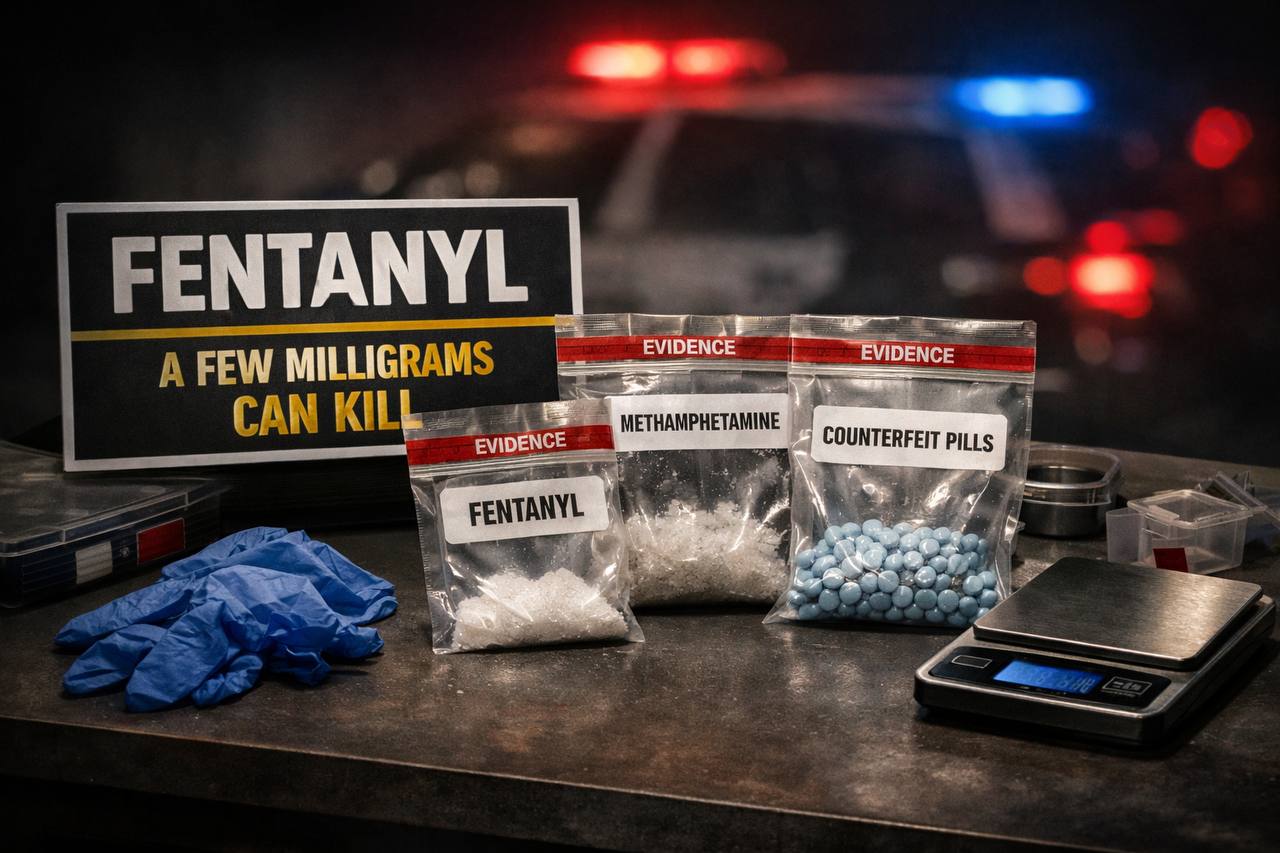
Fentanyl is a synthetic opioid that is up to 50 times stronger than heroin and 100 times stronger than morphine. Even a few milligrams, an amount small enough to fit on the tip of a pencil, can be lethal. Increasingly, fentanyl is mixed into other drugs such as methamphetamine, cocaine, and counterfeit pills, often without the user’s knowledge. This makes experimentation with any illicit substance especially dangerous.
Young people are particularly at risk. Many teens and young adults mistakenly believe prescription-style pills obtained on the street are safe or assume they are using drugs like marijuana or cocaine without opioids. In reality, fentanyl has been found in substances across the illicit drug market, leading to a sharp rise in accidental overdoses among younger populations nationwide.
Public safety officials stress that awareness and education are critical tools in preventing tragedy. Understanding that a single use of an illicit drug can be fatal is a message that cannot be overstated. Unlike past generations, today’s drug landscape is unpredictable; users often have no way of knowing what substances are actually present or how potent they may be.
The sentence imposed by United States District Judge Mary Geiger Lewis sends a strong message about the seriousness of fentanyl trafficking and the consequences for those who profit from distributing these substances.
Assistant U.S. Attorney William K. Witherspoon prosecuted the case.
As law enforcement continues to target large-scale drug distributors, community leaders, schools, parents, and public safety agencies play a vital role in prevention. Open conversations with young people about fentanyl, overdose risks, and the reality of today’s drug supply can save lives.
This case serves as a stark reminder: fentanyl is not just a law enforcement issue, it is a public health crisis. Educating young people about the dangers is essential to protecting them, their families, and the community as a whole. Please click the link below to read more facts about this very dangerous drug…
