
By PSA Newsroom Staff
When a nonprofit organization accepts public or grant funding, it does so under clearly defined conditions — including strict reporting, documentation, and compliance requirements. When those requirements are not followed, the failure is often dismissed as a paperwork issue or administrative oversight. But regulators, auditors, and prosecutors view it more carefully.
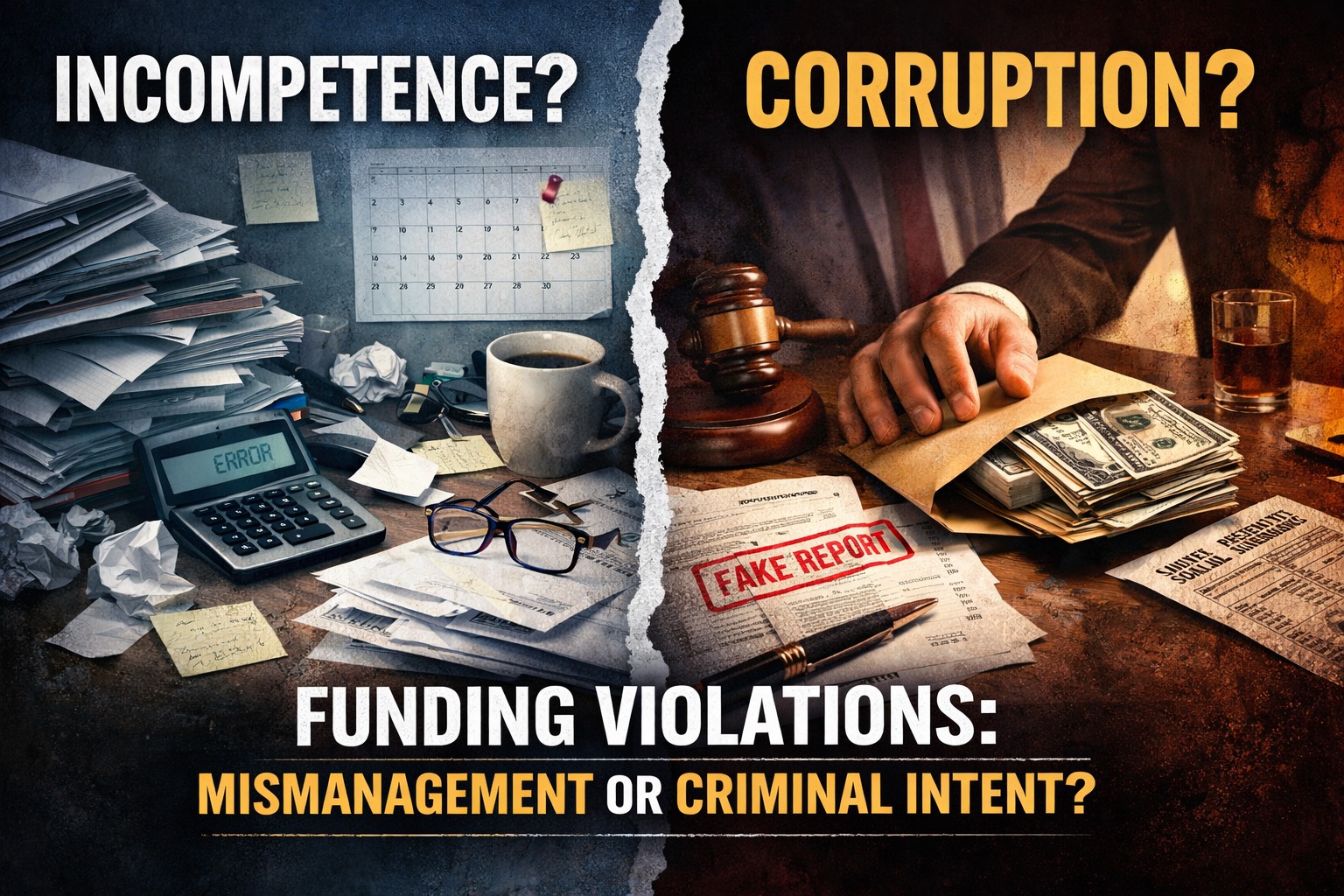
The central question is whether the failure reflects incompetence, corruption, or a combination of both.
Understanding the Difference
Incompetence refers to mismanagement without intent to deceive. This can include poor recordkeeping, lack of staff training, missed deadlines, or misunderstanding grant rules. In these cases, the organization may be ill-equipped to manage funds but is not actively trying to mislead funders.
Corruption, by contrast, involves intent. It occurs when an organization knowingly violates funding rules, submits false or misleading reports, or conceals noncompliance to continue receiving money or protect leadership.
The distinction matters. Incompetence typically leads to corrective action, audits, repayment of funds, or loss of eligibility for future grants. Corruption can lead to civil penalties, criminal charges, leadership removal, and permanent debarment from public funding.
When Incompetence Becomes Corruption
Investigators note that many cases begin as mismanagement but escalate when leadership fails to act once problems are identified. A commonly cited pattern is:
Initial noncompliance → discovery or warning → failure to correct → concealment
At that point, the issue is no longer capacity, but choice.
Evidence Investigators Look For
To determine whether a violation is incompetence or corruption, investigators focus less on the original mistake and more on what happened after the problem was known.
Key indicators include:
1. Knowledge of Requirements
Evidence that leadership or staff were trained on grant conditions, signed compliance certifications, or received written guidance from the funder undermines claims of ignorance.
2. Repeated Violations
Isolated reporting failures may indicate mismanagement. Repeated failures across multiple reporting periods suggest willful disregard.
3. Audit Findings and Responses
Audit reports, management letters, or monitoring reviews are critical. Investigators examine whether deficiencies were acknowledged and corrected — or ignored.
4. Internal Communications
Emails, meeting minutes, and internal memos can show whether leaders discussed compliance issues and chose not to act, or directed staff to “fix it later” or “make it work.”
5. False or Backfilled Reports
Submitting reports known to be inaccurate, recreating records after the fact, or certifying compliance without documentation is a strong indicator of intent.
6. Continued Acceptance of Funds
Continuing to draw down funds while knowing reporting requirements are unmet weighs heavily against an organization.
7. Personal or Institutional Benefit
Investigators assess whether leadership salaries, contracts, political influence, or organizational survival depended on keeping the funding despite noncompliance.
8. Lack of Self-Reporting
Organizations acting in good faith typically disclose problems to funders. Silence, delay, or disclosure only after discovery raises red flags.
The Legal Threshold
Courts and enforcement agencies do not require proof that the original violation was intentional. Instead, they focus on whether leadership knowingly allowed noncompliance to continue or took steps to conceal it.
In regulatory terms:
-
- Negligence becomes fraud when misstatements are certified as true.
-
- Mismanagement becomes corruption when it is hidden.
-
- Mistakes become liability when warnings are ignored.
Bottom Line
Failure to follow funding guidelines is not automatically corruption. But once an organization understands the rules, recognizes violations, and continues without correction or disclosure, the issue shifts from incompetence to accountability.
As one compliance expert summarized in prior enforcement actions:
“The cover-up, not the mistake, is what turns a management failure into a corruption case.”
