
By PSA Newsroom Staff
CLEMSON, SC: Freedom of speech is one of the most fundamental rights in the United States. Protected by the First Amendment, it allows individuals to express ideas, opinions, and criticism without fear of government punishment. That protection extends to educators, including teachers and university professors.
But schools are not ordinary workplaces. They are built on trust — trust between educators and students, schools and families, and institutions and the communities they serve. In that environment, respect should be a no-brainer.
The Clemson Case Brings the Issue Into Focus
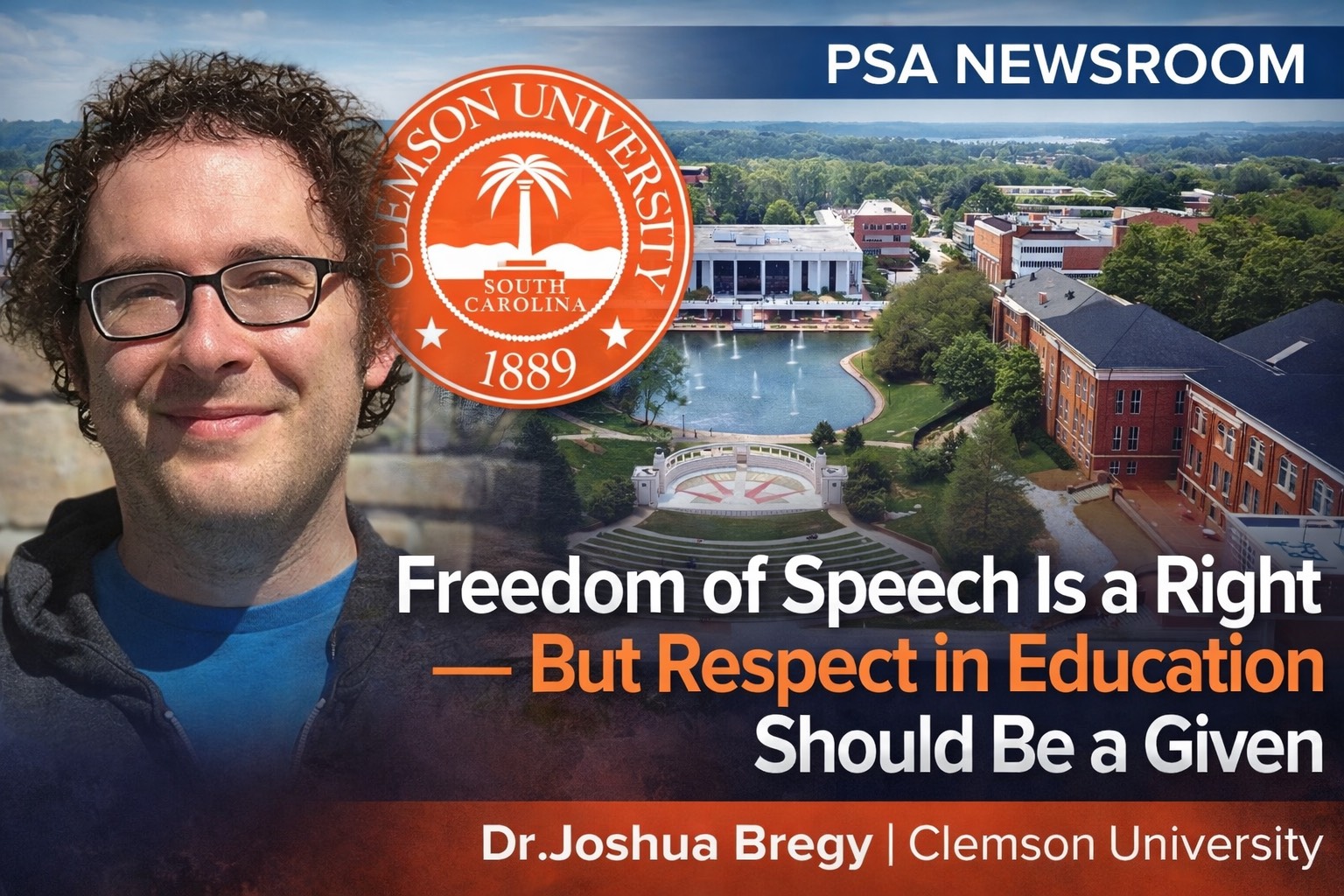
That balance was tested recently at Clemson University with Dr. Joshua Bregy, an assistant professor who was terminated after making a political post on his personal social media account following a national tragedy. While the post condemned violence, its tone and framing sparked public backlash.
The American Civil Liberties Union of South Carolina sued Clemson, arguing the university violated Dr. Bregy’s First Amendment rights by punishing him for speech made as a private citizen. The case ultimately ended in a settlement, with Clemson rescinding the termination and compensating Dr. Bregy through the end of his contract.
Legally, the outcome reaffirmed an important principle: public educators retain free speech rights, even when their views are controversial.
Legal Rights Don’t Eliminate Professional Judgment
However, legal protection does not erase professional responsibility. Educators occupy positions of influence, and their words — whether spoken in class or shared online — carry weight. Students, parents, and community members often see educators as representatives of their schools, even outside working hours.
That is why school districts and universities maintain professional conduct policies. These policies are not designed to silence speech, but to ensure learning environments remain respectful, stable, and focused on students.
Respect is not censorship. It is common sense.
Why Respect Should Come First
For educators, respect means:
-
- Understanding that students and families may see what teachers post online.
-
- Recognizing that emotionally charged moments require care and restraint.
-
- Remembering that trust, once lost, is difficult to rebuild.
The First Amendment protects speech from government punishment — it does not guarantee freedom from consequences within a professional setting. Thoughtless expression can disrupt classrooms, strain community relationships, and distract from the mission of education.
A Simple Expectation
The standard for educators does not need to be complicated:
-
- Follow institutional policies.
-
- Be mindful of the communities you serve.
-
- Speak with the same responsibility you expect from students.
This is not about politics. It is about professionalism.
Conclusion
Freedom of speech remains a right worth defending, and cases like the one involving Dr. Joshua Bregy underscore its importance. But in education, respect should always come first.
Educators can speak freely and responsibly at the same time. When free expression is guided by judgment and respect, schools remain places of learning and growth — not division.
