
By PSA Newsroom Staff
S.C. – State officials put data front and center, ramped up public involvement, and got serious about enforcement, all to modernize how they handle municipal, construction, and hazardous waste. The big project driving all this? A brand-new State Solid Waste Management Plan, backed by an EPA grant and a deep-dive waste study.
Regulators called 2025 a “groundwork” year. They wanted real, accurate data, smarter recycling habits, and to finally get a grip on those stubborn issues like landfill overload, food waste, and dangerous materials.
A New Plan, Backed by Real Numbers
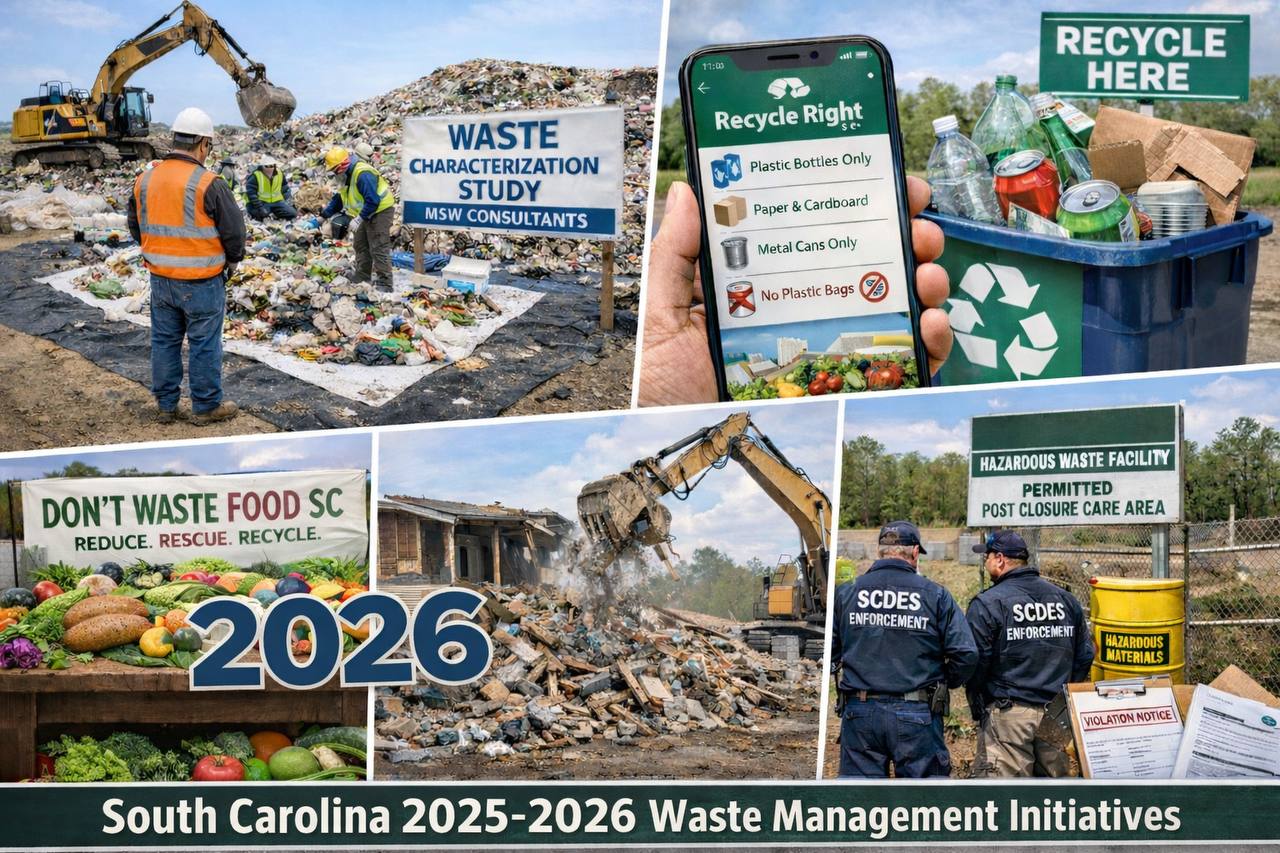
One of the boldest moves was rolling out the updated Solid Waste Management Plan. It’s not just a fancy report, it sets the long-term direction for cutting waste, boosting recycling, and keeping more stuff out of landfills. To get it right, the state brought in MSW Consultants to run a massive study, sorting through what actually ends up in South Carolina’s landfills. They’re sampling waste in two big pushes: first in winter 2025–2026, then again in spring and summer 2026. The idea is pretty simple: get hard numbers, use them to sharpen waste reduction plans, and set policies that actually work for the next ten years.
Zeroing In on Food Waste
Food waste stayed in the spotlight. Year after year, studies show it’s a huge chunk of what gets tossed. So, the Department of Environmental Services pushed their “Don’t Waste Food SC” campaign even harder in 2025, updating stats and connecting with more people, businesses, and schools.
They put a lot of energy into showing folks how to waste less food at home, especially around the holidays (when, let’s be honest, the trash cans start overflowing). It’s not just about saving resources—cutting food waste also means less junk in landfills and less environmental fallout.
Making Recycling Easier (and Smarter)
People still get tripped up about what goes in the recycling bin, so in 2025, the state started building a “Recycle Right” app. It’s meant to clear up confusion, giving everyone quick answers about what’s recyclable and what’s not, plus details on local programs, but that’s not all. The state kept pushing recycling inside government agencies and out in the community, aiming to cut down on contamination, a problem that’s plagued recycling efforts for years.
Tackling Construction and Demolition Waste
Construction and demolition waste became a bigger focus, too. State leaders launched a new push to recover and reuse material from building, remodeling, and tearing down structures.
This kind of debris makes up a big slice of the waste pie. By recovering more of it, South Carolina hopes to ease pressure on landfills and boost the markets for reused and recycled building materials.
Hazardous Waste: Streamlining and Enforcing
Hazardous waste oversight didn’t take a back seat, either. In 2025, the Bureau of Land and Waste Management rolled out electronic tracking via the myRCRAid system, making it easier to follow hazardous waste and keep up with compliance reporting.
The bureau also kept a close eye on permitting, like post-closure care at the old Pinewood hazardous waste site, and cracked down on any violations, keeping public health and the environment protected.
Staying Tough on Enforcement
Throughout the year, the Department of Environmental Services didn’t shy away from enforcement. They tackled violations wherever they found them: from underground storage tanks (think TA Operating, LLC) to swimming pool safety at places like Carolina Northstar 2, LLC.
State leaders stressed that cracking down on rule-breakers is just as important as education and planning. It keeps everyone honest and up to standard.
2025: The Year South Carolina Laid the Groundwork
Looking back, a few things tie all these efforts together. South Carolina made data king, launched campaigns to get people thinking differently about waste, and blended education with tough oversight.
It was a year about setting the stage, gathering the right info, getting people involved, and making sure the state’s waste policies are ready for whatever comes next.
Environmental officials characterized 2025 as a year focused less on sweeping policy changes and more on building the analytical and institutional
groundwork needed for long-term progress.
As South Carolina moves into 2026, the findings of the ongoing waste characterization study and continued development of the Solid Waste Management Plan are expected to shape the state’s next phase of waste reduction, recycling expansion, and sustainable materials management across both municipal and hazardous waste streams.
