
By PSA Newsroom Staff
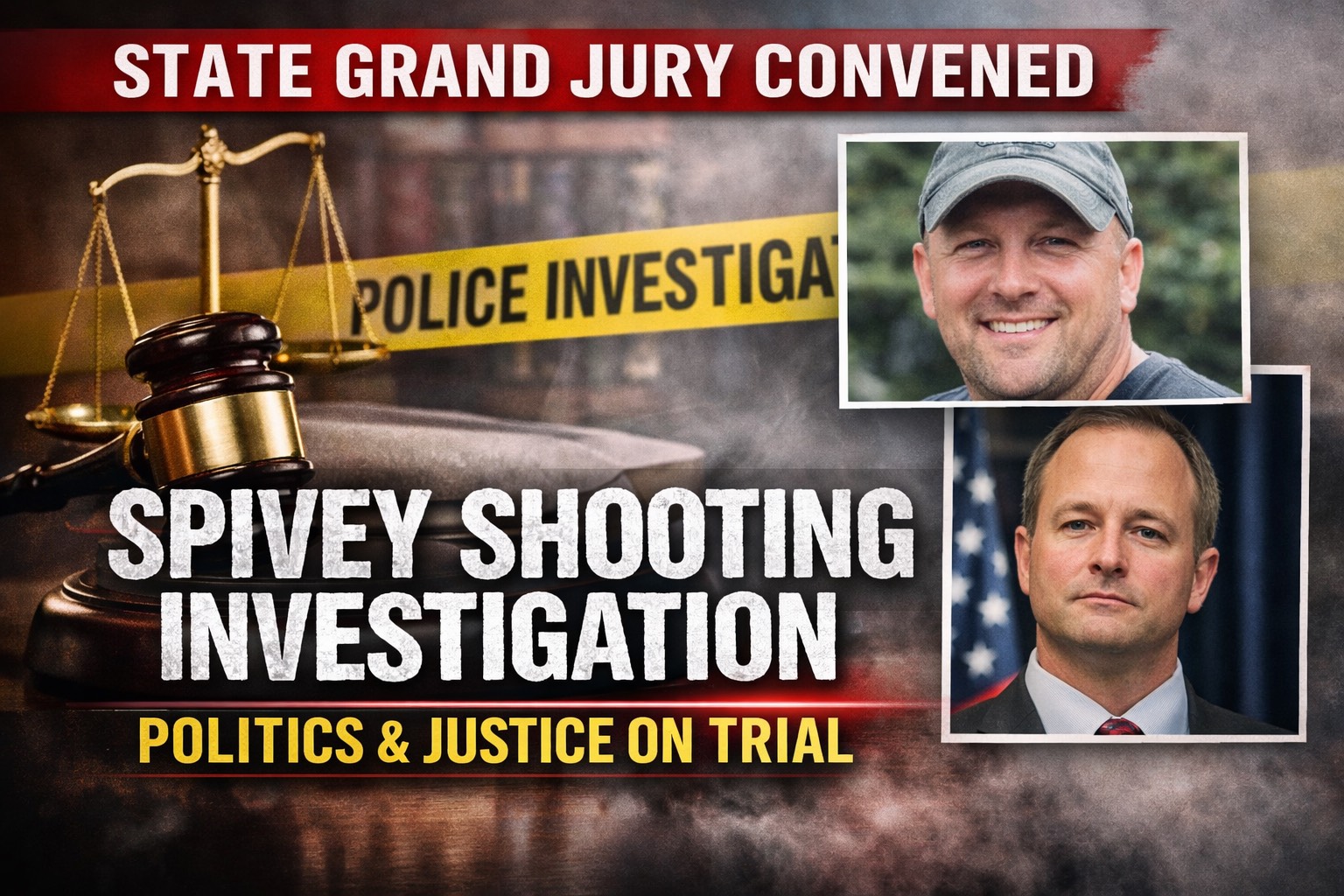
CONWAY, South Carolina — Seventh Judicial Circuit Solicitor Barry J. Barnette has impaneled a State Grand Jury to examine Horry County Police Department’s handling of the 2023 shooting death of Scott Ryan Spivey, Solicitor Barnette’s office announced Wednesday. The move comes after South Carolina Attorney General Alan Wilson, who is also a candidate in the state’s 2026 gubernatorial race, requested a comprehensive review of the case.
Barnette’s decision authorizes a grand jury to review the police investigation and the state law enforcement processes that followed, amid longstanding questions about evidence handling and procedural decisions. The initiative marks a renewed legal focus on the case, which has drawn sustained public and political attention.
Background: Road-Rage Shooting and Legal Review
On Sept. 9, 2023, Scott Spivey was fatally shot along Camp Swamp Road in a rural area of Horry County following a confrontation with North Myrtle Beach business owner Weldon Boyd and a passenger, Kenneth Williams.
Authorities described the incident as a road-rage encounter. Both Boyd and Williams have maintained that they fired in self-defense.
The 15th Circuit Solicitor’s Office initially recused itself and referred the case to the Attorney General’s Office due to a potential conflict of interest. In April 2024, the AG’s office declined to pursue criminal charges against Boyd and Williams, citing insufficient evidence to proceed. In August 2025, it further concluded that South Carolina’s “Stand Your Ground” law applied to the facts of the case, meaning Boyd’s use of deadly force was legally shielded under state law.
The Spivey family and their attorneys subsequently filed a wrongful death lawsuit in June 2024, alleging mishandled evidence, including missing or delayed body-camera and dash-cam footage, and procedural irregularities. Civil discovery has revealed issues that raised fresh concerns about how the case was investigated.
Local officials later asked the South Carolina Law Enforcement Division (SLED) to reopen the criminal investigation, and Attorney General Wilson’s letter to Barnette also made clear the State Grand Jury can evaluate whether any new information should alter the original assessment.
Political Spotlight: Wilson’s Role and the Governor’s Race
Attorney General Alan Wilson’s involvement in the Spivey case enters a politically sensitive moment as he campaigns for the Republican nomination for South Carolina governor in the 2026 election. Wilson, a four-term attorney general, formally entered the governor’s race in 2025.
His handling of the Spivey investigation has become a recurring point of criticism from political rivals, particularly U.S. Representative Nancy Mace, who is also running in the GOP primary. Mace and other critics have accused Wilson of stonewalling the Spivey family, failing to pursue justice, and politicizing legal decisions to protect his record. Mace has repeatedly raised the matter in campaign events and public statements, arguing that the attorney general’s office declined to prosecute and failed to engage meaningfully with the family’s concerns.
Supporters of Wilson’s campaign, including endorsements from law enforcement figures such as more than 20 Republican sheriffs across the state and a veterans coalition, have emphasized his record as a prosecutor and his proposals on public safety and government accountability. These endorsements form part of Wilson’s broader campaign messaging as he seeks to position himself as a law-and-order candidate.
Nevertheless, the Spivey case remains a point of political friction. Opponents argue it underscores broader concerns about crime, prosecutorial discretion and transparency — key issues in the governor’s race. The controversy has drawn attention from voters concerned about public safety and fairness in the justice system.
Human Impact and Ongoing Legal Process
For the family of Scott Spivey, the renewed focus on the case represents both an opportunity and a continuation of a painful chapter. Relatives and advocates have pressed for accountability and a fuller accounting of the events that led to Spivey’s death and how investigators handled evidence and legal determinations. Many express frustration that the initial review did not lead to criminal charges and that communication with state officials has been limited.
The State Grand Jury’s work could result in new indictments or recommendations, but it also reflects enduring tensions over how high-profile investigations intersect with political careers, legal standards, and community expectations. As the jury begins its proceedings, residents and legal observers will be watching for developments that could shape both legal outcomes in the Spivey case and political narratives heading into the 2026 election.
