
By PSA Newsroom Staff
January 2026
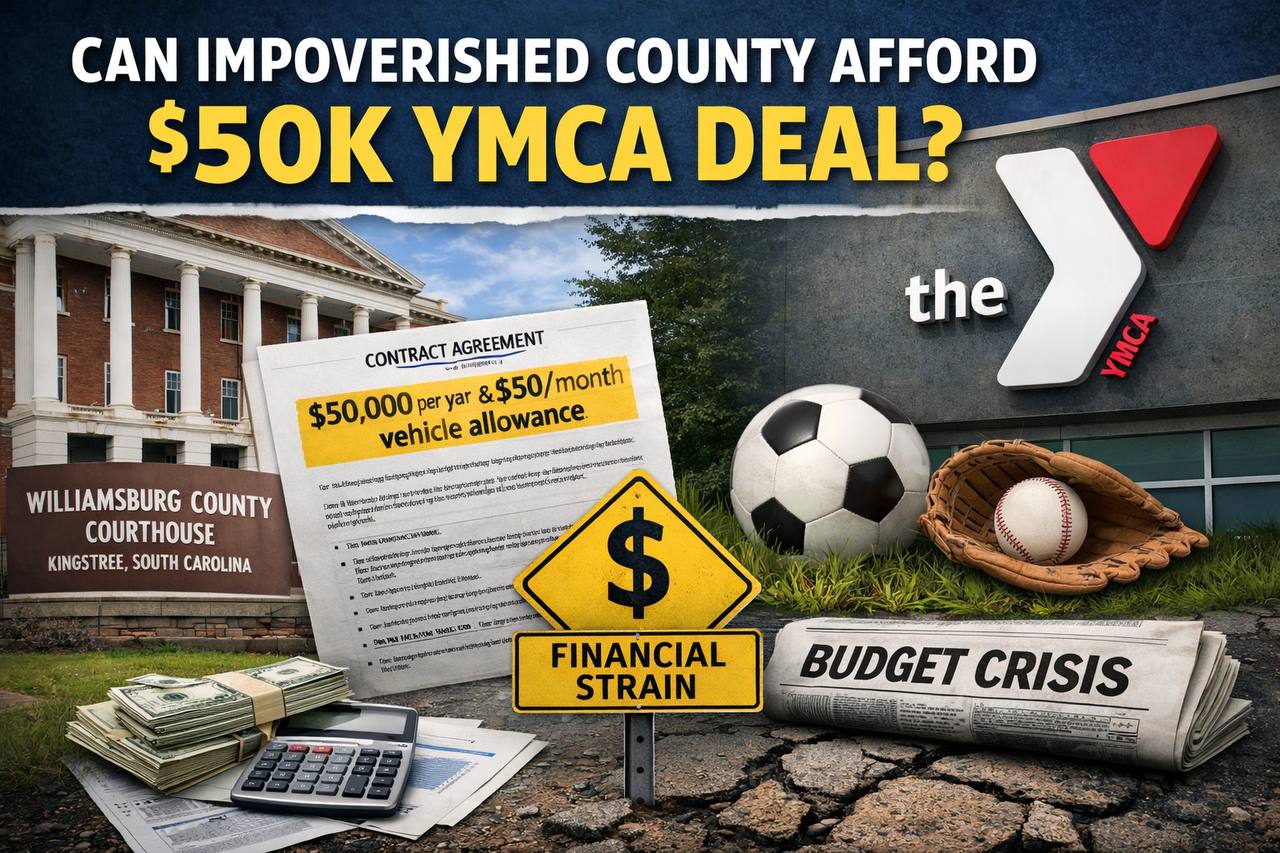
Williamsburg County, – one of South Carolina’s most economically distressed counties, has entered into a one-year contractual agreement committing $50,000 in public funds, plus a $500 per month vehicle allowance, to the YMCA of Coastal Carolina for recreational programming and services.
The agreement, executed in January 2026 and retroactively commencing December 16, 2025, raises significant questions about fiscal priorities, transparency, and how the county plans to meet its existing financial obligations while funding new contractual commitments.
A County With Limited Resources
Williamsburg County has long struggled with limited tax base growth, aging infrastructure, and persistent poverty. Residents routinely hear county leaders cite budget constraints when discussing road repairs, public safety staffing, facility maintenance, and employee compensation.
Against that backdrop, the decision to enter into a $56,000 annual obligation, when the vehicle allowance is included, has prompted concern among taxpayers who question whether the county can reasonably afford the expense.
What the Contract Provides
According to the agreement, the YMCA of Coastal Carolina, headquartered in Myrtle Beach, will provide management, coordination, and operation of recreational, educational, and enrichment programs for youth and seniors in Williamsburg County.
The YMCA will:
• Develop and manage programs
• Utilize county-owned facilities
• Provide quarterly reports on participation, outcomes, and expenditures
• Promote inclusion and outreach to underserved populations
While the YMCA is responsible for program management, the county retains substantial financial and operational responsibilities.
County Still Bears Significant Costs
Under the contract, Williamsburg County agrees to:
• Provide access to county facilities
• Maintain utilities, custodial services, insurance, and basic maintenance
• Assist with scheduling, logistics, and promotion
• Market both county and YMCA programs
• Continue overseeing county employees
• Provide a $500 per month vehicle allowance
These obligations mean the $50,000 payment does not represent the full cost of the partnership. Taxpayers are effectively subsidizing programming while also absorbing the overhead costs of facilities, staffing support, and utilities.
Vehicle Allowance Raises Additional Questions
One provision drawing particular scrutiny is the $500 per month vehicle allowance, paid quarterly alongside the management fee.
The contract does not specify:
• Who receives the vehicle allowance
• What mileage or usage qualifies
• Whether county-owned vehicles were considered as an alternative
• Whether the allowance is tied to documented travel
In a county where departments have cited funding shortages, the inclusion of a recurring vehicle stipend raises questions about oversight and necessity.
Who Collects the Fees?
The agreement outlines a complex structure for program fees:
• If the county operates a program, fees remain county property, but the county pays operating costs.
• If the YMCA operates a program, registration fees belong to the YMCA, while the county assists with collection and receipting.
• Any new YMCA programs require fee approval from the county.
This arrangement has prompted questions about revenue flow, accountability, and auditing, particularly in a county that has faced past scrutiny over financial management practices.
Transparency and Public Input
The contract allows termination with 90 days’ notice and requires the YMCA to maintain records subject to county audit. However, it remains unclear:
• Whether the contract was publicly discussed before approval
• Whether competitive bids were solicited
• How performance will be evaluated beyond quarterly reports
• What benchmarks justify renewal after one year
A Question of Priorities
PSA Newsroom is not questioning the value of youth development, senior fitness, or recreational programming.
Those services are undeniably important, especially in underserved communities.
The question facing Williamsburg County taxpayers is more fundamental:
How does an impoverished county justify new discretionary spending while struggling to meet basic obligations?
As budgets tighten and residents continue to face economic hardship, transparency in spending decisions becomes not just good governance, but a necessity.
PSA Newsroom will continue to monitor this agreement, seek clarification from county officials, and request public records related to the approval, funding source, and oversight of this contract.
Public funds demand public accountability.
