
By PSA Newsroom Staff
What travelers should know before storms disrupt flights, trains, and bus routes
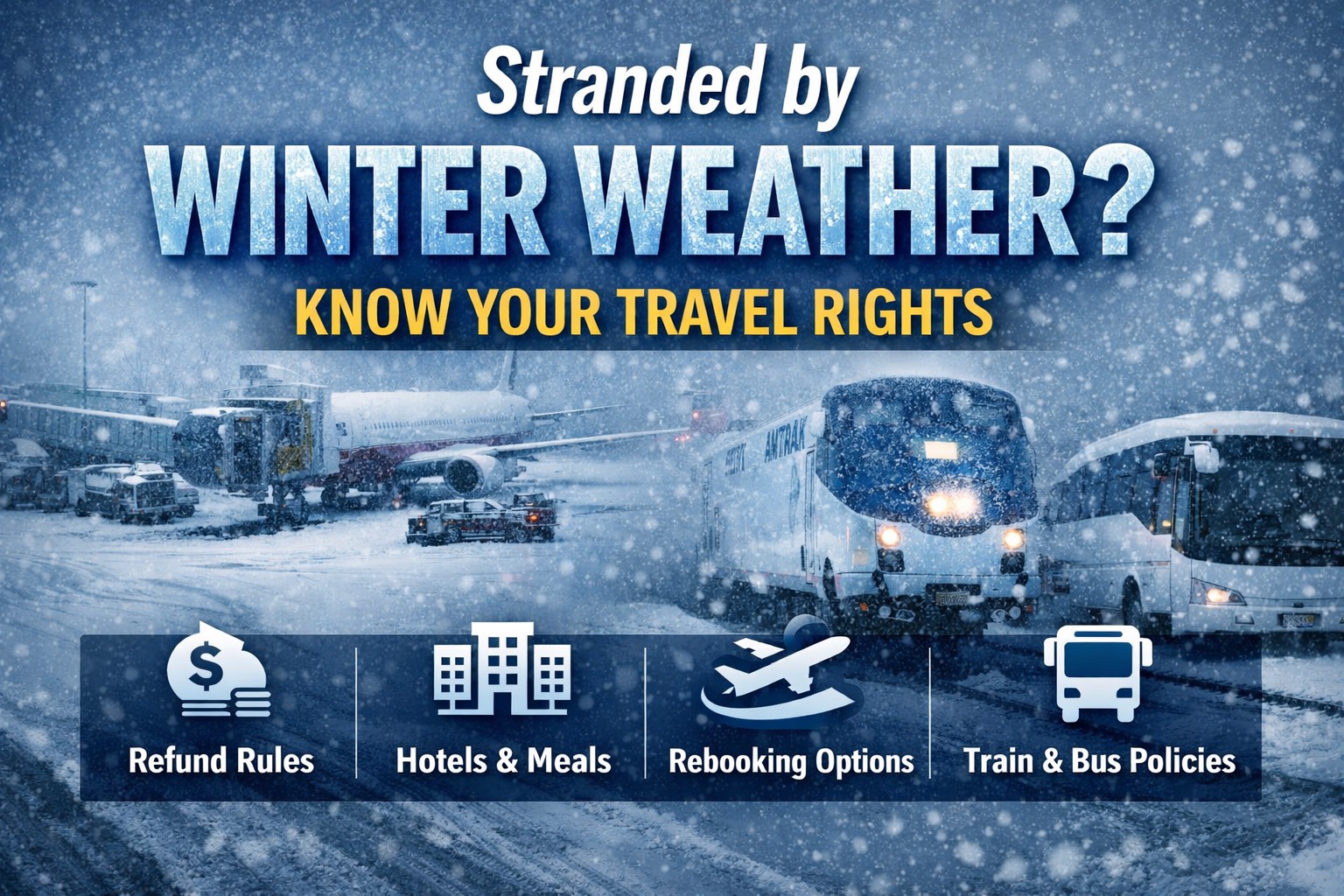
Winter storms can quickly bring travel to a standstill, grounding flights, delaying trains, and canceling bus routes across the country. When that happens, many travelers are left asking the same questions: Am I entitled to a refund? Will the airline pay for my hotel? What happens if I’m stuck overnight?
The answers depend largely on how you’re traveling and why the trip was disrupted.
What Airlines Are Required to Do
Under federal law enforced by the U.S. Department of Transportation, airlines must offer passengers a full refund if a flight is canceled and the traveler chooses not to continue the trip. This requirement applies regardless of the reason for the cancellation, including severe winter weather.
Refunds must be issued to the original form of payment, not airline credit, and must include unused portions of the ticket and optional fees such as checked baggage or seat upgrades. Airlines typically offer to rebook passengers on a later flight at no additional cost, but they are not legally required to place travelers on another carrier if seats are unavailable.
What Airlines Are Not Required to Cover
When cancellations or delays are caused by weather or other events outside the airline’s control, federal law does not require airlines to pay for hotel stays, meals, ground transportation, or cash compensation. Any such assistance is voluntary and based on the airline’s internal policies.
When Additional Help May Be Available
If a delay or cancellation is caused by issues within the airline’s control — such as maintenance problems or crew availability — airlines may offer hotel accommodations, meal vouchers, or travel credits under their customer service commitments. These policies vary by carrier, and travelers are encouraged to confirm them directly with airline representatives.
Recent federal rules have strengthened refund enforcement, including requirements for airlines to issue refunds automatically when they are owed, but U.S. law still does not mandate standardized compensation for long delays.
How Trains and Buses Compare
Passenger protections for trains and buses are more limited. Amtrak generally offers refunds for unused portions of tickets, but there is no federal requirement for compensation due to delays or cancellations, and lodging or meals are typically provided only at the company’s discretion. Intercity bus companies operate under their own terms, with refunds and rebooking policies varying widely and no broad federal compensation requirements.
What This Means for South Carolina Travelers
In South Carolina, winter weather does not have to be extreme to disrupt travel. Light ice, freezing rain, or brief snow events can ground flights at regional airports and create cascading delays across bus and rail routes, particularly in the Midlands, Pee Dee, and Lowcountry where cold-weather infrastructure is limited.
How Travelers Can Protect Themselves
Travel experts recommend downloading carrier apps, enabling real-time alerts, and keeping receipts for meals, lodging, and alternate transportation. Travelers should also review credit card protections or travel insurance policies, which may cover expenses not paid by airlines or other carriers.
Passengers who believe a required refund was not issued promptly can file a complaint with the U.S. Department of Transportation.
The Bottom Line
When winter weather disrupts travel, passengers are guaranteed refunds for canceled flights they choose not to take — but little else is legally required. Understanding the limits of carrier responsibility can help travelers make faster decisions, avoid unnecessary expenses, and better prepare for weather-related disruptions.
