
By PSA Newsroom Staff
A winter storm system moving into the Southeast this weekend has the potential to bring freezing rain to parts of South Carolina, prompting early warnings from meteorologists and safety officials alike.
Frozen precipitation such as freezing rain may begin to develop as temperatures dip near or below the freezing mark while rain continues to fall.
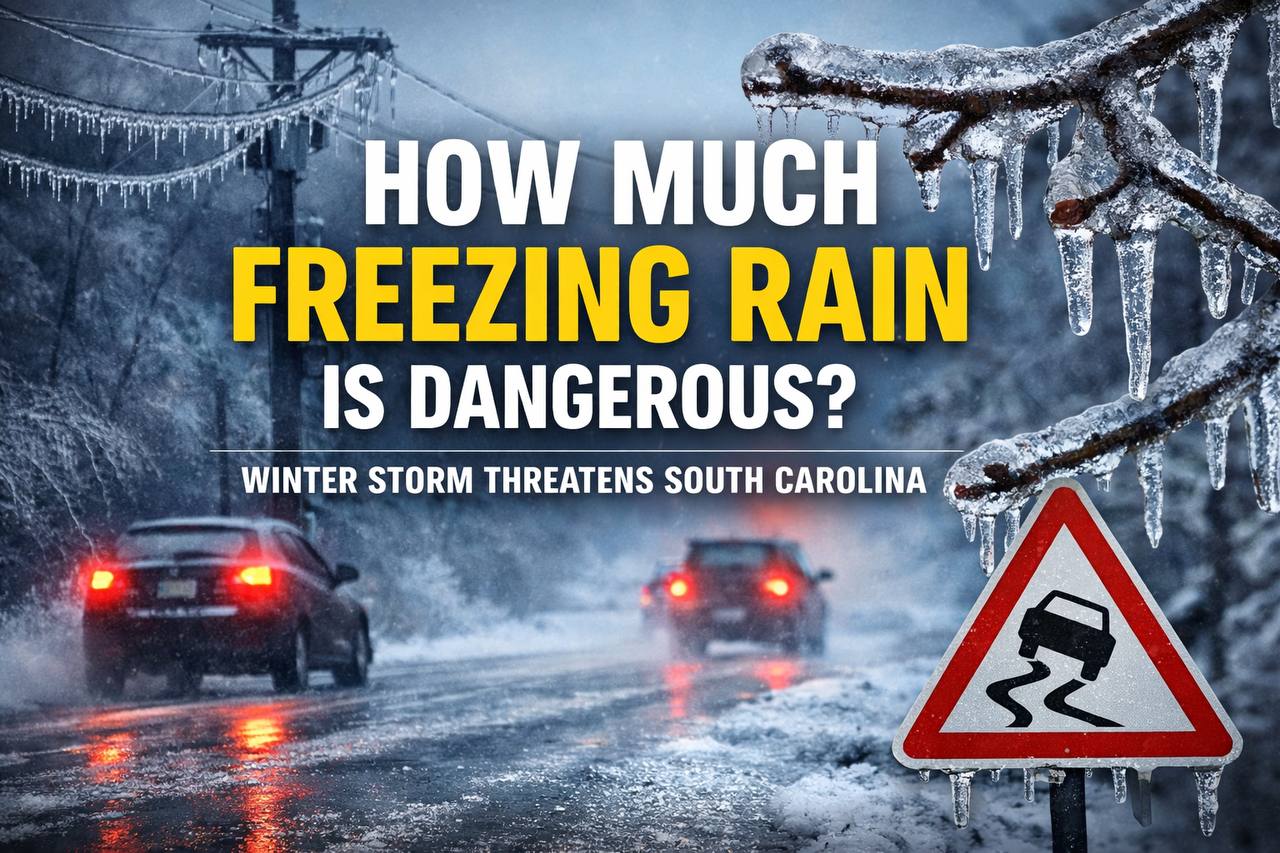
When rain drops meet a surface colder than 32 degrees Fahrenheit, they instantly freeze on contact. That’s what causes ice to build up on roads, sidewalks, trees and power lines, creating hazards that can be far more dangerous than a typical snowfall.
How Much Ice Is Dangerous?
There’s no safe level of freezing rain when it comes to travel and outdoor activity. Even a thin glaze of ice can make road surfaces slick and unpredictable, reducing traction for vehicles and increasing the risk of crashes.
Black ice, a nearly invisible sheet of ice, often forms under these conditions and catches drivers and pedestrians off guard.
Experts and forecasters use thresholds to categorize the severity of freezing rain impacts:
• Light icing (a thin glaze up to about 0.25 inches) can create hazardous travel conditions, especially on bridges, overpasses, untreated roads and sidewalks.
• Ice accumulations of 0.25 inches or more often trigger an Ice Storm Warning from the National Weather Service because this amount can weigh down tree limbs and power lines — increasing the risk of power outages and falling debris.
• Greater accumulations (approaching or exceeding 0.5 inches) are considered especially dangerous and can make travel nearly impossible while causing significant structural damage.
Why Even Small Amounts Matter
Unlike snow, which can sometimes be cleared or plowed, freezing rain forms a solid layer of ice that sticks to every surface it touches. Vehicles require much more stopping distance on icy roads, and motorists can lose control even at low speeds. Pedestrians are also at heightened risk of slips and falls when unseen ice covers walkways and steps.
Bridges and overpasses freeze sooner than regular pavement because they are exposed to cold air on all sides, making them particularly treacherous when freezing rain occurs.
What You Can Do
Local authorities and weather services emphasize preparation ahead of the storm’s arrival:
• Avoid travel if possible once freezing rain begins.
• Allow extra time and distance if you must drive.
• Prepare for possible power outages by charging devices and having supplies on hand.
• Use caution walking outdoors, especially on untreated surfaces.
As forecasts continue to update in the coming days, residents in South Carolina should stay alert for advisories or warnings and monitor local weather updates closely.
